
What Is a Marine Survey and Why You Need One
Introduction
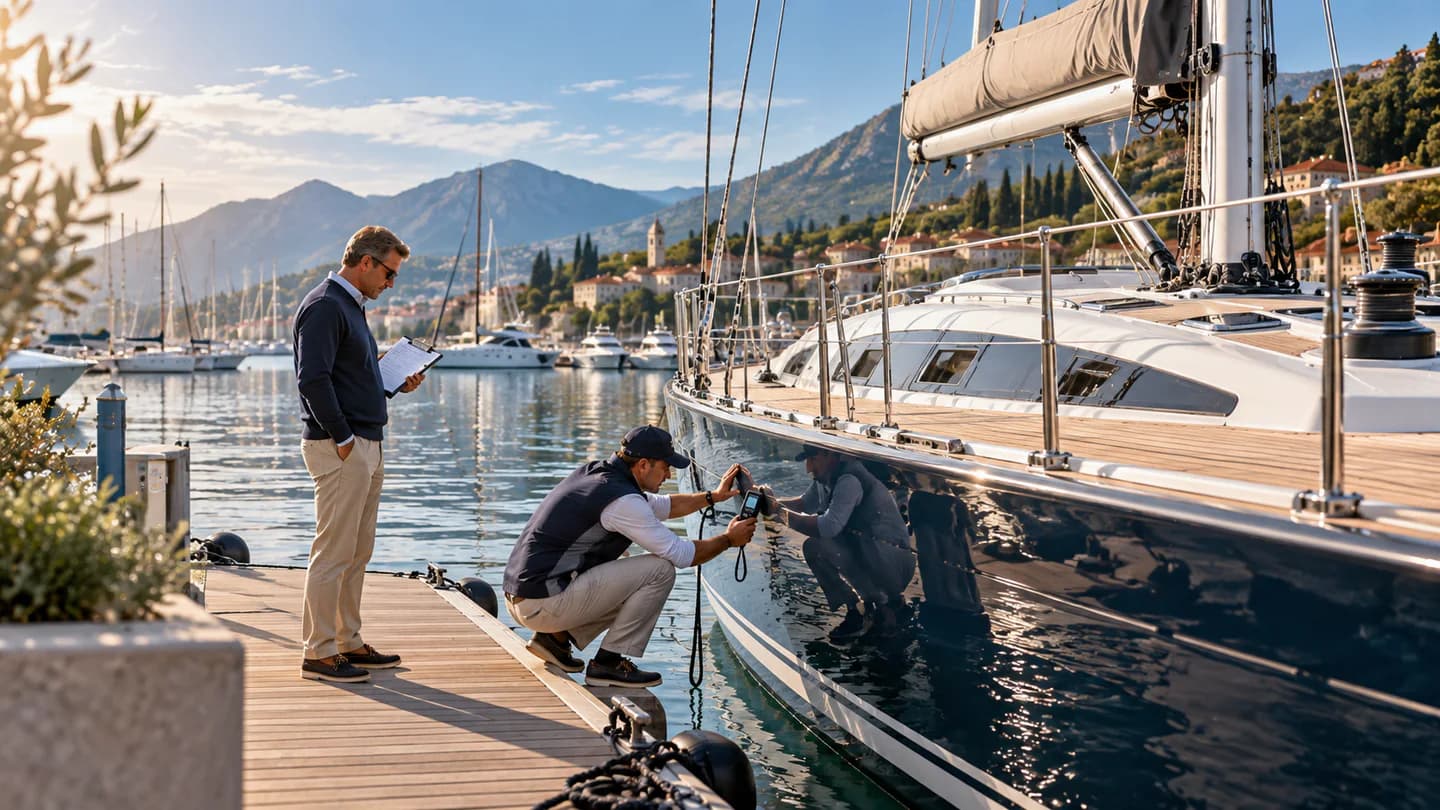
A marine survey is a professional inspection of a boat carried out by a qualified surveyor before purchase. It is the marine equivalent of a building survey — a detailed assessment of the vessel's structural condition, mechanical systems, safety equipment, and overall value. If you are buying any boat worth more than a few thousand pounds, commissioning a survey is one of the most important steps you can take.
Why You Must Get a Survey
Boats are complex, often expensive, and can hide serious defects that are invisible to an untrained eye. Problems concealed beneath a fresh coat of antifouling paint, inside a sealed compartment, or behind a polished interior can cost tens of thousands to rectify — and some can put your life at risk at sea. A survey:
- Reveals hidden structural damage, osmosis, rot, or corrosion.
- Identifies dangerous electrical faults or non-compliant safety equipment.
- Gives you independent evidence to negotiate a better price.
- Is required by most insurers before they will provide cover on a used vessel.
- Protects you legally — it documents the condition of the boat at the time of purchase.
Even if the boat appears to be in excellent condition, even if the seller has a thick folder of receipts, and even if you are an experienced sailor — always get a survey.
Types of Marine Survey
Pre-Purchase Survey (Full Condition and Valuation Survey)
The most comprehensive type. It covers the hull, decks, structure, machinery, electrical systems, safety equipment, accommodation, and rigging (on a sailboat). The surveyor will also provide a current market valuation. This is what you need when buying a used boat.
Insurance Survey
Required by insurers when covering a vessel over a certain age or value. Similar to a pre-purchase survey but focused on risk factors. If you've recently had a pre-purchase survey, most insurers will accept it in lieu of a separate insurance survey.
Damage Survey
Carried out after a collision, grounding, or other incident. Determines the extent of damage and estimated repair cost. Usually commissioned by the owner or their insurer.
Tonnage/Measurement Survey
For registration or race handicapping purposes. Not related to condition.
Who Carries Out the Survey?
Always use an accredited, independent surveyor — one who has no connection to the seller, the broker, or the yard. Professional accreditation bodies include:
- IIMS — International Institute of Marine Surveying (UK and international)
- RINA — Royal Institution of Naval Architects
- SAMS — Society of Accredited Marine Surveyors (USA)
- NAMS — National Association of Marine Surveyors (USA)
- BMF — British Marine Federation accredited surveyors
Choose a surveyor who specialises in the type of vessel you are buying. A surveyor experienced in GRP production cruising yachts may not be the best choice for a traditional wooden gaff cutter or a steel motor trawler.
What Does a Survey Cover?
Hull and Structure
The hull is examined externally and internally for:
- Osmosis — Water penetration into GRP (fibreglass) hulls causing blistering. Minor osmosis is common and manageable; severe osmosis is expensive to treat.
- Structural integrity — Bulkheads, frames, stringers, and keel attachment points.
- Keel bolts — Corroded or loose keel bolts are a serious safety issue.
- Transom and deck — Soft spots indicating water ingress into cored (sandwich) construction.
- Through-hull fittings — Seacocks, skin fittings, and their condition. Seized or corroded seacocks are common and important to identify.
Machinery and Propulsion
- Engine condition, oil condition, coolant, belts, hoses, and mounts.
- Fuel system — tanks, lines, connections, and condition.
- Shaft, propeller, and cutlass bearing.
- Stern gland or shaft seal.
- Saildrive or outboard mounting condition.
Electrical Systems
Electrical faults are a leading cause of boat fires. The surveyor will inspect:
- Battery condition and installation (must be secured in acid-proof boxes).
- Wiring for correct sizing, routing, and connection.
- Fusing and circuit protection.
- Shore power inlet and connections.
- Navigation lights, bilge pump operation, and other essential systems.
Safety Equipment
- Life raft — present, service date, and container condition.
- EPIRB — registration, expiry date, and battery condition.
- Fire extinguishers — type, charge, and service date.
- Flares — expiry date (flares have a 3-year service life in most jurisdictions).
- Life jackets / personal flotation devices — type, service, and auto-inflation mechanism.
- Bilge pumps — manual and electric, condition and operation.
Rigging and Sails (Sailboats)
- Standing rigging — wire or rod for corrosion, broken strands, and swage terminal condition. Most rigging should be replaced every 10 years or after a set number of miles offshore.
- Running rigging — sheets, halyards, control lines for wear and UV damage.
- Sails — condition, UV degradation, panel separation, and reinforcement areas.
- Mast, boom, and spars — condition and fittings.
- Furling systems — operation and condition.
The Haul-Out
A proper pre-purchase survey requires the boat to be lifted out of the water. There is simply no way to properly inspect the underwater sections of the hull, keel attachment, propeller, shaft, and through-hull fittings with the boat in the water. The haul-out is arranged through a boatyard and costs typically £150–£500 depending on vessel size. This cost is borne by the buyer. If a seller refuses to allow a haul-out, walk away.
The Survey Report
After the survey (and sea trial, if the surveyor attends), you receive a written report. A good report will:
- List all findings categorised by severity (e.g., urgent safety issue, significant defect, maintenance recommendation, advisory).
- Provide photographs of key findings.
- State the surveyor's opinion of current market value.
- Summarise the overall condition of the vessel.
Read the report carefully. Don't be alarmed by a long list of minor items — most used boats will have some. Focus on items listed as urgent or significant. These are your negotiating points and the things that must be addressed before the boat goes offshore.
Using the Survey to Negotiate
The survey report is not just documentation — it is a negotiating tool. Common approaches after receiving a survey:
- Request a price reduction equivalent to the cost of significant defects found.
- Ask the seller to rectify specific issues at their cost before closing.
- Withdraw from the purchase if defects are too serious (your deposit should be returnable if the PSA is correctly worded).
Be reasonable — no used boat is perfect. Sellers are not obligated to fix every advisory item. Focus your negotiation on structural defects, safety-critical items, and items that significantly affect the vessel's value or usability.
How Much Does a Survey Cost?
Survey fees vary by vessel size, type, and surveyor. As a rough guide:
- Boats under 30 feet: £300–£600
- Boats 30–50 feet: £600–£1,200
- Boats over 50 feet: £1,200–£2,500+
The haul-out cost is additional. Together, survey and haul-out typically cost £600–£2,000 for a mid-sized cruiser. This is money extremely well spent — a survey has the potential to save you from buying a boat with £20,000 of hidden problems, or give you the evidence to negotiate £10,000 off the asking price.
Summary
A marine survey is non-negotiable for any significant boat purchase. It protects your investment, your safety, and your legal position. Always choose an accredited, independent surveyor who specialises in the vessel type. Insist on a haul-out. Read the report carefully and use it to negotiate or, if necessary, to walk away.