
Antifouling: What It Is and When to Do It
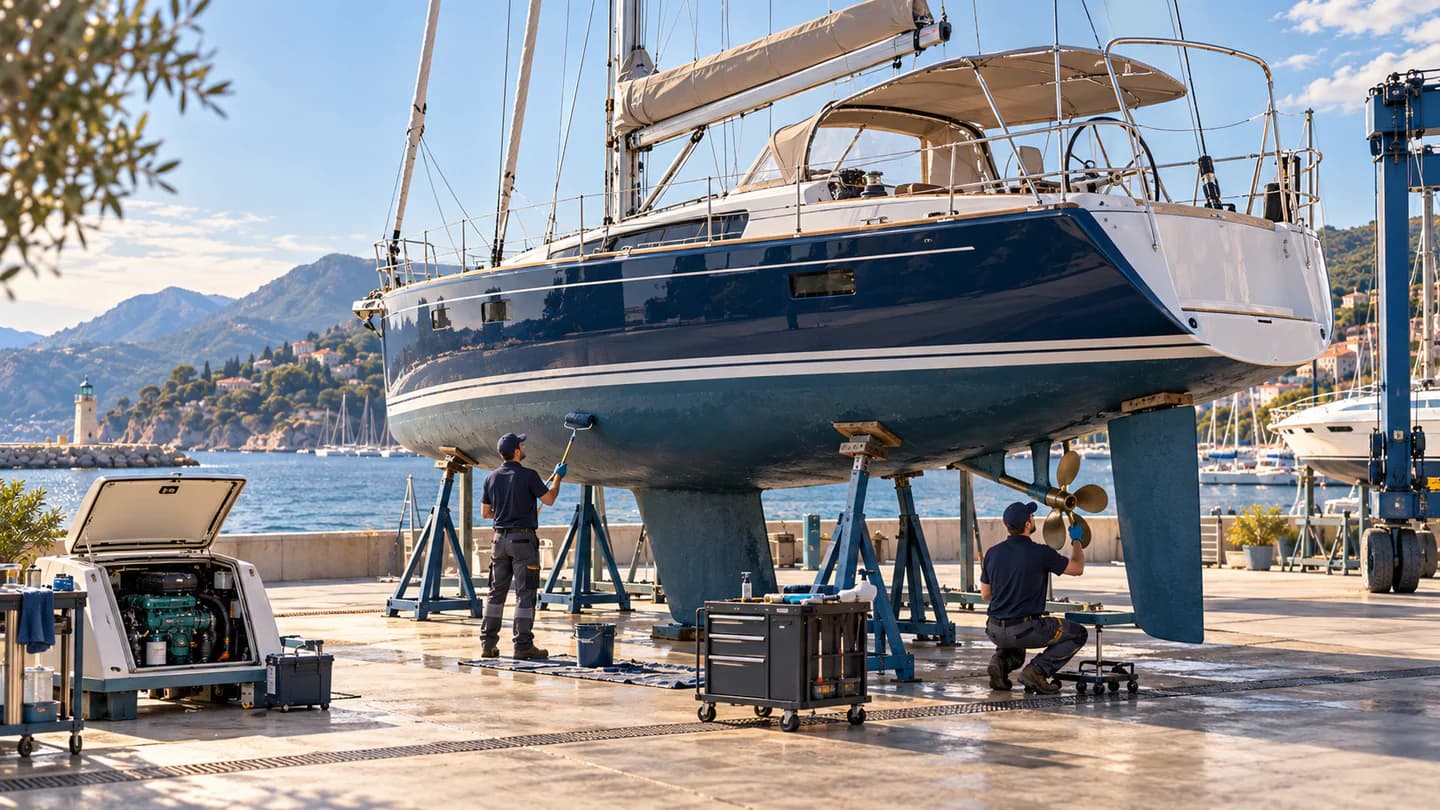
What Is Antifouling and Why Does It Matter?
Any boat kept in the water accumulates biofouling — the build-up of marine organisms on the underwater hull. Within days of launching, bacteria form a slime layer. Within weeks, algae, barnacles, tube worms, mussels, and other organisms follow. Left unchecked, a heavily fouled hull can accumulate tens of kilograms of living matter.
This matters for three practical reasons:
- Drag and performance — A fouled hull generates significantly more hydrodynamic resistance. A sailboat that once sailed at 7 knots may struggle to reach 5.5 knots in the same conditions. A motorboat sees the same effect as added friction at the hull, meaning lower top speed and reduced efficiency at all speeds.
- Fuel consumption — Increased drag translates directly into more fuel burned to maintain speed. Studies consistently show that even moderate fouling raises fuel consumption by 10–20%. For a high-use motorboat, this quickly adds up to hundreds of pounds per season.
- Hull damage — Some organisms cause direct physical damage. Barnacles attach to gelcoat and osmotic blistering paint alike, leaving pits when removed. Tube worms can bore into unprotected timber and fibreglass laminates over time. A fouled hull is also harder to inspect, which allows osmotic blisters and early gelcoat cracks to go unnoticed.
Antifouling paint is the primary defence. It is applied to the underwater sections of the hull (and often the propeller, drive legs, and rudder) and works by leaching biocides slowly into the boundary layer of water around the hull, making settlement by organisms difficult or impossible.
Types of Antifouling Paint
Choosing the right type of antifouling paint depends on how and where your boat is used. There is no single best product — the right choice depends on water temperature, whether the boat moves regularly, how long it sits in the water between haul-outs, and your environmental and budget priorities.
Self-Polishing (Ablative) Antifouling
Self-polishing antifoulings are the most widely used type for cruising and general-purpose boats. The paint matrix slowly erodes as the boat moves through the water, continuously exposing a fresh biocide-rich surface. When the boat is stationary, leaching continues at a slower rate.
- Pros: Effective in a wide range of conditions; does not build up thick layers over multiple seasons; suitable for boats that spend long periods at anchor or on a mooring.
- Cons: Less effective on boats that rarely move; wears away faster on faster boats; requires careful thickness monitoring over time.
- Best for: Cruising sailboats, live-aboards, and motorboats with moderate use.
Hard Antifouling (Racing/Seasonal)
Hard antifoulings form a non-eroding film. They release biocide through a leaching mechanism rather than physical erosion. Because they do not wear away, they can be burnished smooth, making them popular with racing sailors and performance-conscious owners.
- Pros: Can be polished to a smooth finish for speed; effective for high-activity boats that move frequently.
- Cons: Builds up in layers year on year and eventually must be stripped; less effective on stationary boats as biocide is quickly exhausted from the surface layer; generally more expensive.
- Best for: Racing sailboats, fast performance motorboats, boats that are used heavily and consistently.
Copper-Free and Eco-Friendly Options
Traditional antifoulings rely on copper compounds as their primary biocide. Copper is highly effective but accumulates in marina sediments and is toxic to non-target marine life. Many jurisdictions are beginning to restrict or ban copper-based products, particularly in enclosed water bodies.
Copper-free alternatives use biocides such as zinc pyrithione, ECONEA (tralopyril), or physical fouling-release silicone coatings that are too slippery for organisms to grip. Silicone coatings (often called foul-release coatings) contain no biocide at all — they work purely through surface energy, and require the boat to be moving at reasonable speed to self-clean.
- Copper-free biocide paints: Good general-purpose performance; compliant in areas with copper restrictions.
- Foul-release silicone coatings: Best for fast, high-use power boats; ineffective on boats that sit still for weeks; expensive to apply but long-lasting.
- Best for: Environmentally sensitive areas; racing power boats; boats in regions with copper restrictions.
When to Antifoul: Frequency and Timing
The right antifouling schedule depends on where you keep your boat and how you use it. There is no universal rule, but the following principles apply broadly.
Water Temperature
Fouling is dramatically more aggressive in warm water. In the Mediterranean, the Caribbean, or tropical waters, annual antifouling is the minimum — some owners in tropical climates apply twice yearly. In cooler northern European waters, a well-applied ablative coating may last 18 months to two full seasons on a lightly used boat. Cold water below 10°C significantly slows biological growth.
Usage Patterns
- High-use boats (sailed or motored weekly): Self-polishing paints wear faster; inspect and top up annually.
- Moderate-use boats (used fortnightly or monthly): Annual haul-out is standard practice; assess paint thickness each time.
- Low-use boats (occasional use, long periods on mooring): Biofouling attacks hardest here because there is no water movement. Annual treatment is still recommended, and high-loading ablative products are often a better choice.
- Trailered boats: Boats that spend most of their time out of the water accumulate minimal fouling and may only need antifouling every two to three years, depending on how long each launch period lasts.
Timing the Haul-Out
Antifouling is ideally applied in spring, shortly before the start of the sailing season. Paint applied in late autumn and left to dry over winter without water immersion loses much of its effectiveness — biocides leach out without doing their intended job. If you haul out for winter storage, apply fresh antifouling in the spring, not the autumn. See our Winterizing guide for the full out-of-season storage workflow.
The Haul-Out Process Step by Step
Antifouling requires the boat to be lifted out of the water. Understanding the process helps you plan your time and budget accurately.
1. Pressure Washing
As soon as the boat is lifted, the hull is pressure-washed to remove marine growth, loose paint, and slime. This must be done promptly — organisms dry to a cement-like hardness within hours of being out of the water. Most boatyards include a wash-down as part of the haul-out fee.
2. Hull Inspection
With the hull clean and dry, this is the critical moment to inspect for:
- Osmotic blistering — Raised, fluid-filled blisters in the gelcoat indicate moisture ingress into the laminate. Minor blistering is common and manageable; extensive blistering requires specialist repair before antifouling.
- Mechanical damage — Keel bolt weeping, rudder bearing wear, propeller shaft seal condition, and any impact damage from groundings.
- Existing antifouling thickness — If years of paint have built up, the hull may need blasting or sanding back to bare laminate before a fresh system is applied.
This inspection overlaps with what a surveyor does during a pre-purchase survey. For a detailed look at the survey process, see our marine survey guide.
3. Surface Preparation
Sound existing antifouling should be lightly abraded with wet-and-dry sandpaper to give the new coat a key. Bare fibreglass requires an epoxy primer first — this both seals the laminate against moisture and provides a suitable base for antifouling. All through-hull fittings, saildrive legs, and propellers need masking unless specific product is being applied.
4. Applying the Antifouling
Most antifouling paints are applied by brush or roller. Two coats are standard; three coats are recommended on the waterline band and the leading edges of the keel and rudder, which experience the most turbulence and wear. Follow the manufacturer's overcoating times precisely — applying the second coat too early or too late compromises adhesion.
Allow adequate drying time before re-launching. Most products specify a minimum of 12–24 hours dry time, but some two-part systems need longer. Check the data sheet for the specific product used.
DIY vs. Professional Application
Antifouling is one of the few boat maintenance tasks that competent owners can realistically undertake themselves. However, the decision involves more than just cost.
DIY Application
- Pros: Saves labour costs; owner can take time over the inspection; satisfying to maintain your own boat.
- Cons: Antifouling paint is hazardous — copper-based products require full PPE (gloves, goggles, respirator, disposable overalls); disposal of contaminated materials must meet local regulations; working under a boat on a travel lift is not for everyone.
If you choose DIY, buy a quality product (not the cheapest option), follow the technical data sheet, and do not skip the preparation phase. Poorly prepared surfaces result in antifouling that peels after a few months, negating any cost saving.
Professional Application
- Pros: Yard staff are experienced; work is typically faster; some yards include antifouling in an all-in winter package; professionals handle waste disposal.
- Cons: Higher cost; you are relying on yard staff to do a thorough job; worth supervising the prep stage if possible.
Many owners choose a hybrid approach: haul-out and pressure wash by the yard, DIY inspection and antifouling application. This keeps costs down while ensuring the work is done to your standard.
Environmental Regulations
Environmental legislation around antifouling paints is tightening in many parts of the world, and it is the boat owner's legal responsibility to use compliant products in the waters where they sail.
- European Union: The Biocidal Products Regulation (BPR) controls which active substances may be used. Some older biocides have been withdrawn. Always check that the product you buy carries current EU approval for your region.
- United States: California, Washington State, and several other states restrict the copper content of antifouling paints sold for use in their waters. The restrictions are particularly strict for small recreational vessels.
- Enclosed waters and marinas: Some inland and harbour authorities ban certain antifouling products entirely, regardless of national rules. Always check with your marina or harbour master.
- Disposal: Antifouling sanding dust and waste must not enter drains or waterways. Many boatyards have designated containment areas and disposal routes — use them.
When purchasing a boat that has been kept abroad, it is worth confirming which antifouling products have been used, as some substances approved in one country are restricted in another.
How Antifouling Condition Affects Boat Value and Survey Outcome
The condition of the antifouling is one of the first things a marine surveyor examines during a pre-purchase survey. It signals how a boat has been maintained overall.
- Fresh, well-applied antifouling: A positive indicator. Suggests the owner has kept to a regular maintenance schedule. Buyers and surveyors view this favourably.
- Flaking or peeling antifouling: Raises immediate questions. Delamination suggests poor surface preparation, an incompatible system, or moisture in the laminate. A surveyor will probe further for osmotic problems.
- Heavily built-up paint: Years of antifouling without a strip-back adds weight to the hull and can obscure underlying damage. A surveyor will note excessive paint build-up as a defect requiring remediation.
- No antifouling / fouled hull: On a boat that has been in the water, the absence of antifouling or a heavily fouled hull signals neglect. This affects the negotiating position of the buyer and is likely to result in a lower valuation.
Sellers who invest in a fresh haul-out and antifouling before listing typically recover the cost in the asking price and face fewer survey-related renegotiations. For more on preparing a boat for sale, see our guides on Annual Boat Maintenance and Total Cost of Boat Ownership.
Typical Costs
Antifouling costs vary considerably by boat size, location, and whether labour is included. The figures below are indicative for a typical sailing or motor cruiser in a Western European or North American boatyard.
Haul-Out and Re-Launch Fees
- Up to 10m (33ft): £300–£700 / $350–$850 for haul-out, pressure wash, and re-launch.
- 10–14m (33–46ft): £600–£1,200 / $700–$1,400.
- Over 14m (46ft+): Costs rise steeply with beam and displacement; obtain quotes from the yard directly.
Antifouling Paint
- A 2.5-litre tin of quality ablative antifouling covers approximately 8–12m² with one coat. Expect to use 2–4 tins for a 10m boat applying two coats.
- Budget £50–£100 / $60–$120 per tin for a mid-range ablative product. Premium two-component or copper-free products are significantly more expensive.
Professional Labour (Antifouling Application Only)
- Typically charged per metre of boat length: £25–£60 / $30–$70 per linear metre for a basic application.
- Full osmotic treatment or strip-back and epoxy barrier coat significantly increases cost; get a written quote before proceeding.
All-In Annual Package (Haul, Storage, Antifoul, Relaunch)
Many boatyards offer winter package deals that bundle all services. For a 10m boat, expect £1,500–£3,500 / $1,800–$4,200 depending on yard rates and location. This is one of the larger line items in the annual cost of boat ownership.
Antifouling as Part of a Broader Maintenance Strategy
Antifouling does not exist in isolation. The haul-out is the ideal time to address any underwater work: replacing sacrificial anodes, servicing the propeller shaft seal, inspecting keel bolts, and checking through-hull fittings. Bundling this work with the antifouling visit reduces haul-out costs and ensures nothing is missed.
For a full annual maintenance framework, see the Annual Boat Maintenance Checklist. To understand how antifouling fits into the broader picture of running costs, see Total Cost of Boat Ownership.
If you are looking for a boat and want to understand the condition of the underwater hull before buying, read our marine survey guide and our Hull Types Explained guide for context on how hull material affects antifouling requirements.
Browse sailboats for sale, motorboats for sale, or all listings on our platform.