
Winterizing Your Boat
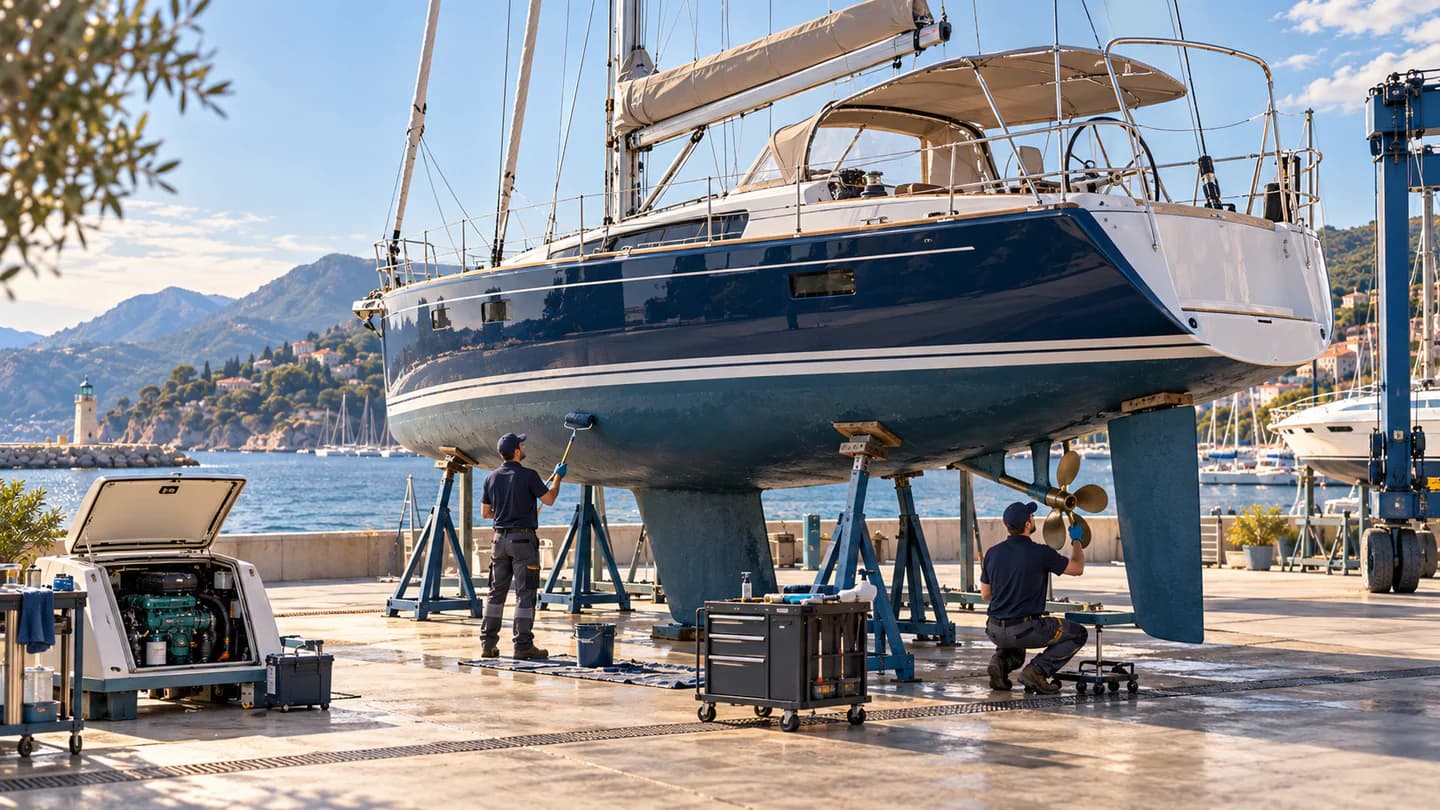
What Is Winterizing and Why Does It Matter?
Winterizing a boat means preparing it for an extended lay-up period — typically autumn through to spring in temperate climates. Done properly, it protects your engine, plumbing, hull, and interior from the two main threats of cold-weather storage: freezing water and long-term neglect.
Water expands by roughly 9% when it freezes. Any water left inside an engine's raw water cooling circuit, freshwater plumbing lines, or the heads can split pipes, crack heat exchangers, or shatter pump impeller housings. The repair bills routinely run into thousands. The cost of winterizing properly is a small fraction of that.
Beyond freeze damage, a boat left unattended for several months deteriorates in predictable ways: batteries go flat and sulfate, diesel grows microbial contamination, bilge moisture encourages mould, and unchecked condensation damages soft furnishings and electronics. A thorough winterizing process addresses all of these.
This guide covers every major system. Whether you're storing a small motorboat on a trailer or a bluewater cruising yacht on the hard, the principles are the same. For a broader view of annual maintenance costs, see our Total Cost of Boat Ownership guide.
Engine Winterizing
The engine is the most expensive single system on most boats. Correct lay-up procedure protects both the raw water cooling circuit and the internal engine components from corrosion during storage.
Flushing the Raw Water Cooling System
Most marine diesel and petrol engines use raw water cooling — they pump seawater or lake water directly through the engine to absorb heat. That water must be completely purged before freezing temperatures arrive.
- Close the raw water seacock.
- Disconnect the raw water inlet hose from the seacock and place it in a bucket of clean fresh water mixed with antifreeze (use non-toxic propylene glycol antifreeze, not ethylene glycol, in systems where it may contact drinking water or the environment).
- Start the engine and run it at idle until antifreeze appears at the exhaust outlet. This confirms the antifreeze has passed through the raw water pump, heat exchanger, and exhaust injection elbow.
- Shut the engine down. Remove and inspect the raw water impeller — replace it if it shows any cracking, deformation, or missing vanes. Storing a boat on an old impeller guarantees a failure on commissioning day.
For more detail on diesel engine cooling systems, see our Diesel Engine Maintenance Basics guide.
Fogging the Cylinders
Fogging oil is a light preservative oil sprayed into the air intake (or directly into each cylinder via the spark plug holes on petrol engines) while the engine runs or cranks. It coats cylinder walls, pistons, and valve heads with a protective film that prevents rust forming on bare metal surfaces during months of inactivity.
- For diesel engines: spray fogging oil into the air intake while the engine runs at idle, then shut it down. The oil smoke visible from the exhaust is normal.
- For petrol (gasoline) engines: remove spark plugs, spray fogging oil into each cylinder, crank briefly to distribute, then refit plugs.
Changing the Engine Oil Before Lay-Up
It is tempting to leave the oil change until spring commissioning. Do not. Used engine oil contains combustion acids, microscopic metal particles, and moisture that corrode bearing surfaces and cylinder walls over a winter. Change the oil and filter before lay-up so the engine sits in clean, neutrally pH-balanced oil for the entire storage period.
- Change the oil and filter while the engine is warm so contaminants are suspended and drain fully.
- Run the engine briefly after the oil change to circulate the fresh oil.
- Check gearbox oil and change if due.
- Check the stern gland (stuffing box or dripless seal) and adjust or repack as needed.
Freshwater Systems
Any pressurised freshwater system — tanks, pumps, pipes, calorifier (water heater), shower sump, and heads — can freeze and split if water is left standing inside. The approach is to drain everything completely, or fill with antifreeze where draining is impractical.
Draining All Freshwater Lines
- Open all cold and hot taps and leave them open while the system drains.
- Switch on the pressure water pump briefly to push residual water out of the lines. Switch it off before it runs dry for too long.
- Drain the freshwater tank completely, or leave it almost full if you are in a climate where the tank itself is not at freeze risk (a full tank is less susceptible to freeze damage than a partially filled one).
- If the boat has a water heater/calorifier, locate the drain plug at its lowest point and drain it fully. Water heater tanks are particularly vulnerable to freeze damage.
- Pour a small quantity of propylene glycol antifreeze into each drain trap (sinks, shower sump) to protect the U-bends.
Seacocks and Through-Hulls
Close all seacocks for winter storage. This is good practice regardless of temperature — a seacock left open on an unattended boat is a risk if a hose fails. Operate each seacock through its full range before closing it, then grease the spindle with waterproof grease if it is a traditional bronze gate or ball valve type.
Heads (Marine Toilets)
The marine toilet is a common source of freeze damage because it contains seawater in the bowl, pump, and hoses.
- Pump the bowl dry, then pump through a litre of propylene glycol antifreeze diluted with water according to the manufacturer's instructions.
- Close the intake and discharge seacocks.
- If the boat has a holding tank, pump it out before lay-up. A full holding tank over winter is unpleasant to deal with in spring.
Fuel System
Diesel and petrol both degrade over time, and a partially filled tank encourages condensation that introduces water into the fuel. Water in diesel is the primary cause of diesel bug — microbial growth that clogs fuel filters and injectors.
Topping Up the Tank
Fill the fuel tank to 90–95% capacity before lay-up. A nearly full tank leaves minimal air space for moisture-laden air to condense into water. Do not fill completely — allow a small volume for thermal expansion.
Adding Biocide and Fuel Stabiliser
- Diesel biocide: add a proprietary diesel biocide treatment to kill any existing microbial contamination and prevent regrowth during storage.
- Petrol stabiliser: petrol degrades faster than diesel, especially ethanol-blended fuel. Add a fuel stabiliser product, then run the engine for 10 minutes to distribute it through the carburettor or fuel injection system.
- After adding treatments, run the engine for a few minutes to circulate treated fuel through the system before final shut-down.
Replace fuel filters at lay-up or at spring commissioning — do not carry forward a filter that has been in service all season.
Hull and Deck Preparation
The hull requires attention both below and above the waterline before going onto the hard or into a berth for winter.
Antifouling and Bottom Inspection
If the boat is being lifted out of the water, this is the ideal time to inspect and service the antifouling. Pressure-wash the bottom while it is still wet immediately after haulout — dried antifouling is far harder to remove. Inspect for osmotic blistering, damage to the gelcoat, and any signs of delamination. For a full treatment of bottom paint options, see our Antifouling Guide.
Inspect the hull-to-deck joint, keel bolts (check for rust staining or weeping), and the area around any through-hull fittings.
Deck and Cockpit
- Clean the deck thoroughly, including cockpit lockers and the bilge.
- Wash and condition rubber seals on hatches and portlights. Apply a silicone lubricant to keep them pliable over winter.
- Check all deck hardware fastenings for tightness. Loose stanchion bases and cleats often only reveal themselves under load, but a winter inspection gives time to rebedded properly.
- Apply a UV-protective wax or polish to GRP topsides if the boat will be stored uncovered or under a thin winter cover.
Propeller and Stern Gear
- Remove the propeller if practical, inspect for dings and erosion, and have it repaired or balanced if needed.
- Inspect the cutlass bearing for wear (side play in the shaft is the indicator).
- Grease the propeller shaft and taper with a waterproof grease if leaving it fitted.
- Check the sacrificial anodes on the shaft, P-bracket, and hull. Replace any anode that is more than 50% depleted.
Interior: Moisture Control and Ventilation
A closed, unventilated boat interior over winter becomes a mould incubator. The priority is to reduce moisture and keep air moving.
Ventilation
- Leave all locker doors, cabin doors, and drawers open to allow air circulation throughout the interior.
- Prop open the cooker oven door and fridge/freezer doors (leave them off their latches) to prevent mould growth.
- If the boat is under a winter cover, ensure the cover allows some airflow — a completely sealed cover traps condensation.
- Fit passive ventilators or mushroom vents if the boat does not have them. A single Dorade box or a pair of solar-powered extraction fans makes a significant difference.
Dehumidification
Place moisture-absorbing desiccant containers (such as silica gel or calcium chloride dehumidifier products) throughout the interior. In a damp climate, one or two containers will fill within weeks — check and replace them monthly, or use a mains-powered dehumidifier if shore power is available.
Removing Valuables and Perishables
- Remove all flares, fire extinguishers, and life-saving equipment. Flares should be checked for expiry and replaced if needed before the next season.
- Remove all food, drinks, and toiletries — even sealed containers will attract pests over winter.
- Remove expensive electronics: chartplotter, VHF radio, handheld devices, binoculars, and cameras.
- Remove cushions and soft furnishings if possible, or stand them on their edges to allow air to circulate around them.
- Remove the dinghy and outboard motor for separate storage.
Mast and Rig (Sailboats)
Whether to leave the mast stepped over winter is a pragmatic decision depending on the marina, the boat's berth, and local weather. Many owners in exposed locations or in areas with heavy snow loads choose to unstep the mast to reduce windage and eliminate the risk of rigging failure in winter gales. Owners browsing sailboats should ask about the rig's service history as part of any pre-purchase inspection.
If Leaving the Mast Stepped
- Inspect all standing rigging for broken strands, particularly at the swage terminals at the chainplates and masthead. Replace any rigging that shows signs of fatigue.
- Check the condition of all turning blocks, sheaves, and masthead fittings.
- Remove running rigging that is not needed (halyards, spinnaker gear). Store coiled and out of UV light.
- Remove sails and wash them before storage — salt and dirt accelerate UV degradation and mildew.
- Ease off all furling drum tension and remove furled headsails if practical.
If Unstepping the Mast
- Photograph all rigging connections and cable runs before removal — it saves significant time in spring.
- Tape or label all wiring connectors clearly.
- Store the mast horizontally on padded supports — an unsupported mast can develop a permanent bend.
- Coil and bag all standing rigging, labelling each wire to its corresponding attachment point.
- Inspect the mast base, gooseneck fitting, and keel-stepped base for corrosion or cracking.
Battery Care Over Winter
Lead-acid and AGM batteries left in a discharged state over winter suffer sulfation — an irreversible crystallisation of lead sulfate on the plates that permanently reduces capacity. Proper winter battery care extends battery life significantly.
- Fully charge all batteries before lay-up. A battery at 100% state of charge can withstand lower temperatures without freezing damage; a discharged battery can freeze at just a few degrees below zero.
- Disconnect all loads: isolate the battery banks using the main isolation switches to prevent parasitic drain from bilge pump float switches, alarms, and any electronics left aboard.
- Use a maintenance charger (trickle charger or smart charger): if shore power is available, connect a temperature-compensated smart charger set to its maintenance or storage mode. This keeps batteries at full charge without overcharging.
- Check electrolyte levels on flooded (wet) lead-acid batteries before lay-up. Top up with distilled water if plates are exposed.
- Lithium (LiFePO4) batteries have different storage requirements: store at approximately 50–60% state of charge, not full. Consult your battery manufacturer's specific guidance.
- If removing batteries for indoor storage, keep them in a cool, dry location — not a room with a gas boiler or other ignition sources, as lead-acid batteries vent hydrogen gas during charging.
Winterizing Summary Checklist
- Engine: Flush raw water circuit with antifreeze, replace impeller, fog cylinders, change engine oil and filter, top up gearbox oil, grease stern gland.
- Fuel: Fill tank to 90–95%, add biocide or stabiliser, run engine to circulate, replace fuel filters.
- Freshwater: Drain all lines and water heater, add antifreeze to drain traps, close all seacocks.
- Heads: Pump through antifreeze, pump out holding tank, close seacocks.
- Hull: Pressure-wash antifouling, inspect for osmosis, replace sacrificial anodes, service propeller and stern gear.
- Deck: Clean and wax, condition rubber seals, check all deck hardware fastenings.
- Interior: Open all lockers and doors, deploy dehumidifiers, remove valuables and perishables.
- Rig (sailboats): Inspect standing rigging, remove sails, remove running rigging or unstep mast.
- Batteries: Fully charge, disconnect loads, connect maintenance charger if available.
Recommissioning in Spring
A boat that was properly winterized is significantly easier and faster to bring back into service. Spring commissioning is essentially the reverse of winterizing, with additional checks added.
- Reinstall all removed equipment and safety gear. Replace out-of-date flares.
- Open seacocks and check each one for smooth operation.
- Reconnect batteries and test all electrical circuits.
- Check the raw water impeller — replace it if it has been in service more than one season, or if it was not replaced at lay-up.
- Check all belts and hose clips on the engine.
- Run the engine on the dock before launching. Check for water flow at the exhaust within 30 seconds of starting.
- Check the bilge for any water ingress before launching.
- Inspect the bottom antifouling and apply a fresh coat if needed before the boat goes back in the water.
- Re-tension and inspect rig if the mast was unstepped.
For a complete spring recommissioning task list, see our Annual Boat Maintenance Checklist. If you are buying a boat that has been stored for winter, our marine survey guide explains what a surveyor will check after a lay-up period.
Whether you own a motorboat or a sailing yacht, a disciplined winterizing routine is one of the highest-return investments you can make in your boat's longevity. Browse our full range of boats for sale if you're considering an upgrade before next season.