
How to Sell Your Boat: Complete Seller's Guide
Introduction
Selling a boat takes more preparation than most sellers expect. Buyers are informed, the market is competitive, and a poorly presented listing will be ignored in favour of one with professional photos and a clear, detailed description. This guide walks you through every stage of the selling process — from initial preparation to the moment the funds clear and the keys change hands.
Step 1: Decide How You Want to Sell
You have two main options:
Sell Through a Yacht Broker
A broker handles the entire process on your behalf — valuation, listing, viewings, negotiation, survey coordination, and closing paperwork. Their commission (typically 8–10% of the sale price) is paid from the proceeds at closing. For larger vessels, complex transactions, or if you simply don't have the time or experience to manage the process, a broker is worth every penny.
Sell Privately
You manage the listing, viewings, and paperwork yourself. You keep the full sale price, but you take on all the time, effort, and risk. Private sales work well for smaller, simpler vessels where the transaction is straightforward.
Step 2: Get a Realistic Valuation
The single biggest mistake sellers make is overpricing. An overpriced boat sits on the market for months, accumulating stigma — buyers wonder what's wrong with it. Price it right from day one.
- Search listings for comparable boats (same make, model, year, condition, equipment) on major platforms.
- Ask a broker for a written valuation — most will provide one as part of their pitch for the listing.
- Be honest about condition. A boat needing £5,000 of work is not worth the same as an equivalent ready-to-sail boat.
- Factor in included equipment — sails, electronics, dinghy, and safety gear all add value.
Price to attract interest, not to anchor to what you paid. What you spent on the boat is irrelevant to the market.
Step 3: Prepare the Boat for Sale
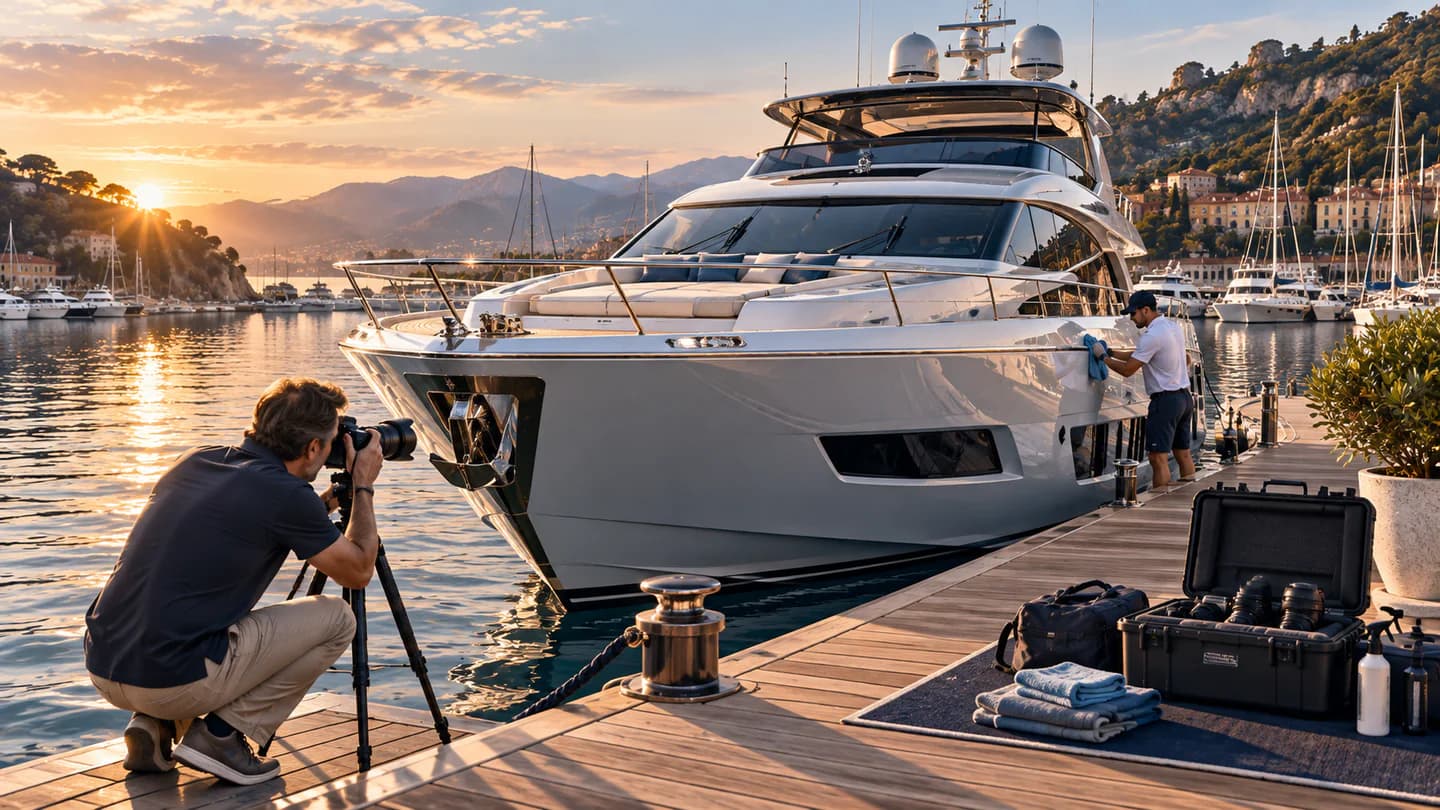
Presentation matters enormously. A clean, well-maintained boat sells faster and for more money than an equivalent boat in poor condition. Before listing:
- Clean the boat thoroughly — hull, topsides, cockpit, and interior. A professional detail is worth the cost.
- Service the engine and address any obvious mechanical issues. A smoky engine or seized seacock will show up in the survey.
- Fix cosmetic damage — cracked gelcoat, worn upholstery, broken fittings. These are cheap to fix but disproportionately affect a buyer's first impression.
- Gather all documentation — service records, receipts, manuals, registration papers, survey history, and warranty documents.
- Renew any out-of-date safety equipment — life raft, EPIRB, flares. This removes a common negotiating point for buyers.
Step 4: Create Your Listing
Your listing is the boat's shop window. Buyers make a shortlist based entirely on what they see online — if your listing is incomplete or poorly presented, they will move on to the next one.
A strong listing includes:
- Complete, accurate specification — make, model, year, LOA, beam, draft, displacement, engine make/model/hours, sail area
- A well-written description that covers the boat's history, condition, recent upgrades, and why it's suited to its intended use
- A comprehensive equipment list — navigation electronics, safety gear, deck equipment, comfort items
- High-quality photographs — exterior, interior, engine bay, sails, cockpit, and any notable features
- Honest disclosure of any known issues
On our platform, listings are built using a structured area system — a General area for the main overview, plus additional areas for the engine, interior, electronics, sails, and other key sections. Each area has its own description and images, making it easy for buyers to navigate a detailed listing.
Step 5: Submit for Publication
Once your listing is complete and your broker has reviewed it, it is submitted for approval. Our platform reviews listings to ensure they meet quality standards before going live. Once approved, your listing is published and visible to all buyers.
You can update the listing at any time after approval — price adjustments, new photos, or additional details can be added without the need to re-submit.
Step 6: Respond to Enquiries Promptly
Speed matters. Buyers who enquire about multiple boats will shortlist those where the seller responds quickly and helpfully. Slow or vague responses lose sales.
On our platform, all buyer enquiries arrive directly in your inbox as conversations. Your broker team can be assigned to each listing, so enquiries are handled by the right person. Internal notes allow your team to collaborate on a buyer without the buyer seeing the discussion. Aim to respond to every enquiry within a few hours during business hours.
Step 7: Conduct Viewings
Be flexible and accommodating with viewing requests. Buyers may be travelling some distance to see the boat. Prepare for each viewing:
- Have the boat clean and accessible — hatches open to show the interior is dry and aired.
- Engine warmed up or available for a cold start demonstration.
- Documentation ready to show — service records, previous survey if available.
- Be honest and proactive about disclosing known issues — a buyer who discovers them later will use them more aggressively in negotiation.
Step 8: Negotiate and Accept an Offer
Most buyers will offer below asking price. This is normal and expected. Consider:
- Is the offer reasonable relative to market value?
- Is the buyer pre-qualified and ready to proceed (have they mentioned financing, survey plans)?
- How long has the boat been on the market?
Once you reach agreement, the offer is formalised in a Purchase and Sale Agreement (PSA). A deposit (typically 10%) is placed in escrow — held by your broker until the transaction closes. This protects both parties.
Step 9: Support the Survey and Sea Trial
The buyer will commission a marine survey and sea trial at their cost. Make the boat available and cooperative:
- Arrange haul-out at a suitable yard.
- Ensure the engine is fuelled and ready for the sea trial.
- Be available to answer the surveyor's questions honestly.
- Be prepared for a renegotiation based on survey findings — this is standard.
Step 10: Close the Sale
Once the buyer is satisfied with the survey and sea trial, the transaction closes:
- The buyer pays the balance via bank transfer or through escrow.
- A Bill of Sale is signed by both parties.
- You transfer title — deliver the original registration certificate, any outstanding manuals, and spare parts.
- Any outstanding finance on the boat must be settled before or at closing.
- Your broker releases the escrowed deposit and final payment to you, less commission.
On our platform, digital contracts can be prepared and signed electronically — our contract system supports multiple parties, sequential or simultaneous signing, and automatic PDF generation of the completed documents. This means the paperwork can be signed remotely without the need for couriered documents.
After the Sale
- Notify your insurer that the boat has been sold.
- Cancel your marina berth (and give adequate notice to avoid penalties).
- Notify the registration authority of the change of ownership.
- Cancel any standing orders for marina fees or maintenance contracts.
Selling Timeline
As a rough guide for a well-presented, correctly priced cruising yacht:
- Preparation: 2–4 weeks
- Time on market to accepted offer: 1–6 months (varies widely with price, condition, and market)
- Survey and sea trial: 1–2 weeks after offer accepted
- Post-survey negotiation and closing: 1–2 weeks
Total typical timeline: 2–8 months from decision to sell to funds received.